Theo Washington · 6 September 2026
How Integrated Workspace Platforms Are Changing Knowledge Retention Strategies in Distributed Teams
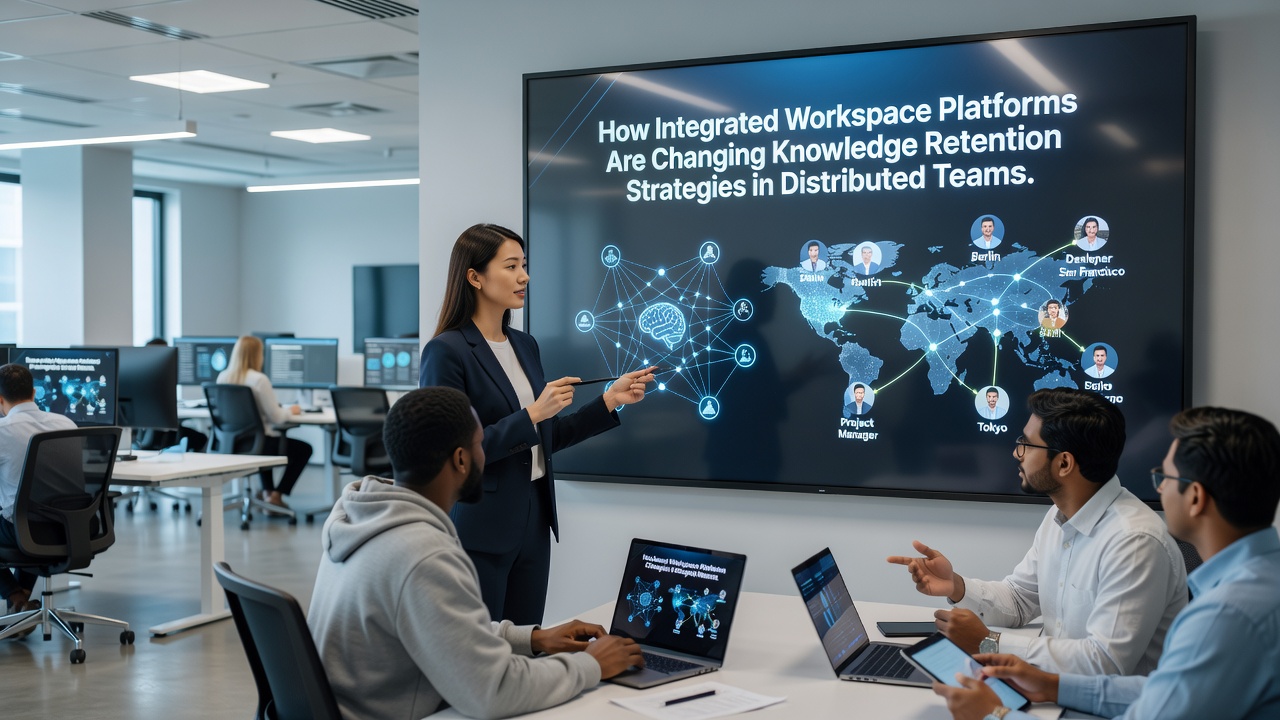
Distributed teams now operate across multiple time zones and locations, which has shifted how organizations capture and preserve institutional knowledge. Integrated workspace platforms combine communication tools, document management, and search functions into single environments, and these systems have altered traditional approaches to knowledge retention by making information more accessible and searchable in real time.
The Growth of Distributed Work Structures
Organizations adopted remote and hybrid models at scale after 2020, and government statistics from Statistics Canada show that over 30 percent of Canadian workers performed their duties from home on a regular basis by 2025. This pattern created new requirements for storing expertise that previously resided in physical offices or informal conversations. Teams lost spontaneous knowledge transfer when employees no longer shared the same physical space, so companies turned to digital solutions that could replicate and improve upon those exchanges.
Integrated platforms such as Microsoft 365 and Google Workspace connect chat histories, project documents, video recordings, and task lists in unified interfaces. These connections allow teams to retrieve context from past discussions without needing to contact the original participants directly. Data from the OECD indicates that countries with higher rates of remote work also reported increased investment in collaborative software during the same period.
Challenges in Retaining Knowledge Across Locations
Distributed environments generate large volumes of unstructured information through daily messages and file updates. Without centralized systems, critical details often remain scattered across personal inboxes or individual drives. Researchers at the Australian National University documented cases where project teams spent an average of four hours per week searching for information that already existed within their organizations.
Turnover compounds the issue because departing employees take tacit knowledge wth them when no digital record exists. Integrated platforms address this by automatically archiving conversations alongside related files and decisions, creating searchable timelines that new team members can review independently.
Platform Features Supporting Retention
Modern workspace tools incorporate AI-assisted search that surfaces relevant content across multiple applications. When a team member queries a past decision, the system can pull the original chat thread, attached documents, and approval timestamps in a single view. This reduces reliance on individual memory and makes knowledge available regardless of whether the original contributor remains with the organization.
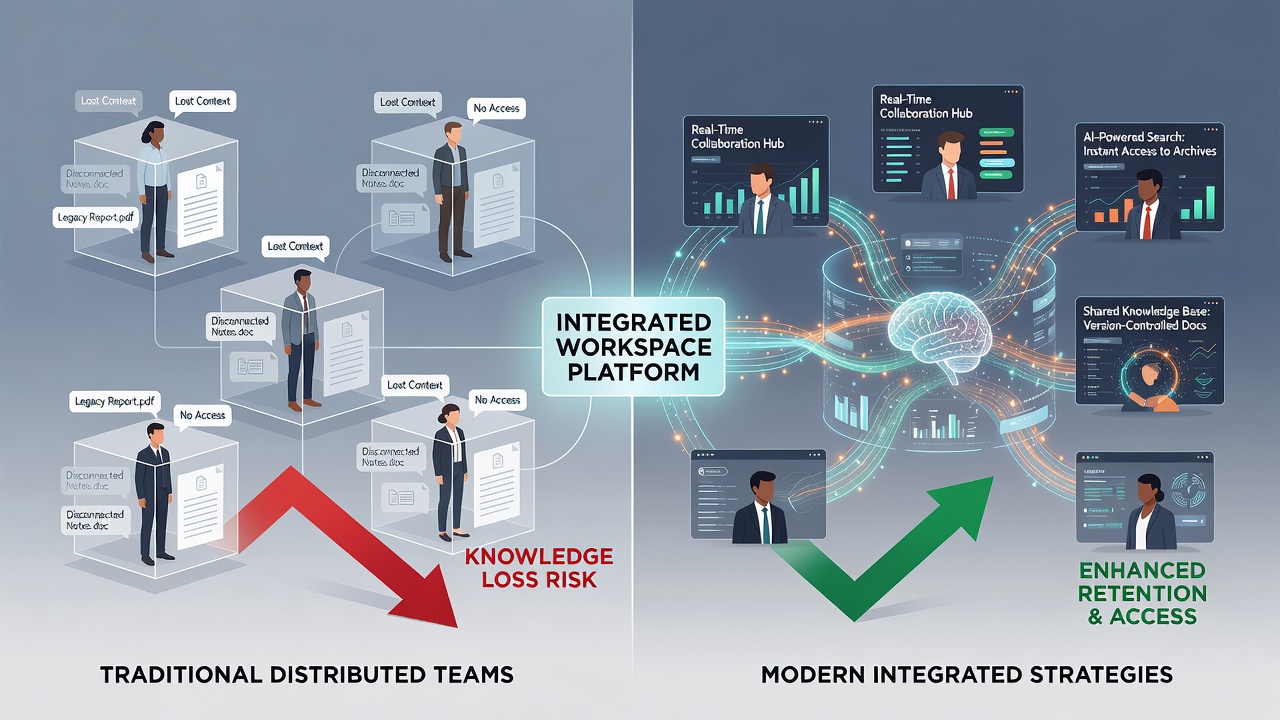
Version control and comment threads preserve the reasoning behind changes to documents and codebases. Team members in different regions can review the evolution of a project without needing synchronous meetings. In September 2026, industry reports highlighted that companies using these features experienced measurable reductions in duplicated work because employees located existing solutions more quickly.
Implementation Patterns Observed in Organizations
Many enterprises now designate specific channels or workspaces for different knowledge categories, such as client histories or technical procedures. This structure helps surface information during onboarding and reduces the time required for new hires to reach full productivity. Academic studies from the University of Melbourne have examined how consistent tagging and metadata practices within these platforms further improve retrieval accuracy over time.
Integration with external data sources also plays a role. Some platforms connect directly to customer relationship systems or internal wikis, allowing knowledge to flow between tools without manual copying. Observers note that this connectivity creates living repositories rather than static archives that quickly become outdated.
Measuring Outcomes and Adjustments
Organizations track metrics such as search success rates and time spent on information retrieval to evaluate platform effectiveness. When these indicators improve, teams report greater confidence in locating historical context. Eurofound surveys across European member states have recorded similar patterns, where distributed teams using integrated systems maintained continuity during periods of staff change more effectively than those relying on email alone.
Training programs have evolved alongside the technology. Companies now include platform-specific modules that teach employees how to structure messages and documents for future retrieval. These practices turn daily work into contributions to the collective knowledge base rather than isolated exchanges.
Conclusion
Integrated workspace platforms have introduced systematic methods for capturing expertise in distributed settings. By connecting communication, documentation, and search capabilities, these tools enable organizations to retain knowledge that might otherwise disappear when team members change locations or roles. Continued development in areas such as automated summarization and cross-tool connectivity suggests that retention strategies will keep evolving alongside the platforms themselves.